Before buying lift kits and truck accessories in Reading, choose between a leveling system and a complete suspension lift. A leveling kit corrects factory rake while preserving daily manners, and a suspension lift adds examine this material clearance, wheel travel, and bigger tire options. Collect exact year, trim, drivetrain, and suspension details to confirm Rough Country fit. Budget for tires, alignment, and add-ons like steps, lights, or liners—you'll understand how the right setup develops.
Main Points
- Opt for a leveling system to eliminate factory rake while maintaining near-stock performance and enabling slightly larger tires for routine driving.
- Choose a suspension lift for increased ground clearance, wheel travel, and trail capability, recognizing that handling and steering may differ.
- Check exact fitment with your truck's year, model, make, drivetrain, trim, cab, bed, and suspension system before buying Rough Country items.
- Align lift height and shock choice with your needs, covering commuting, trail use, towing, or intensive off-road driving.
- Plan your budget for more than the kit price, including alignment, labor, wheels, tires, shocks, and supporting accessories like steps, lights, and liners.
Comparing Suspension Lift Kits and Leveling Kits
While both modifications change your truck's stance, suspension lift kits and leveling kits address different problems and deliver different outcomes. A leveling upgrade usually raises the front to match the rear, correcting factory rake with little change to geometry, ride height, and drivability. You use one when you want a cleaner look and room for slightly larger tires.
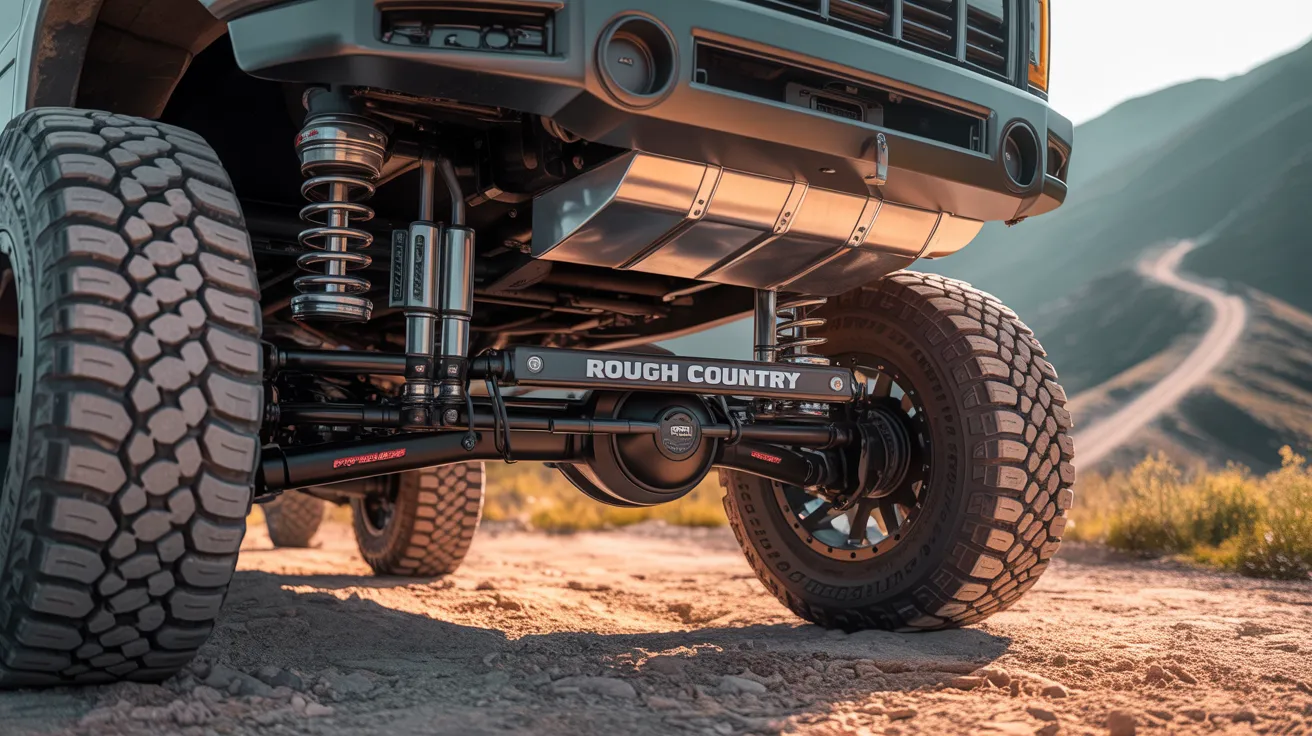
A suspension lift kit raises the whole truck and changes critical parts to produce more ground clearance and wheel travel. You'll see larger improvements in ride height, off-road capability, and tire fitment, but you should expect handling changes, steering differences, and a raised center of gravity. If you want subtle visual improvement, use a leveling kit. If you require real clearance and articulation, use a suspension lift and design the supporting mods around your needs.
Find the Rough Country lift kit that fits your truck.
To determine the best option, start with your truck's year, brand, and model, transmission type, and intended use, because Rough Country builds lift kits around specific geometric requirements and capability objectives. That baseline tells you which mounting brackets and suspension parts will actually attach securely without fitment or alignment problems.
Next, verify stock ride height, cab and bed configuration, axle configuration, and whether your truck has 2WD, 4WD, or adaptive suspension. Rough Country compatibility guides streamline this check, but you still need to validate trim compatibility against trim-specific hardware and factory package variations. A kit that fits a Silverado 1500 may not fit a Trail Boss, and a Ram with air-based suspension necessitates different accommodations than a coil-spring truck. Once you verify fitment first, you eliminate fitment surprises, hardware conflicts, and return delays.
Which Rough Country lift kit suits your how you drive?
Match the kit to your driving patterns, and you'll receive superior ride quality, lasting performance, and tire clearance without purchasing unnecessary capability. If commuting is your main activity, pick a basic Rough Country leveling kit or a 2- to 3.5-inch suspension setup optimized for daily comfort and stable steering response.
When you divide time between road and off-road use, go with a suspension system that includes improved shocks and corrected arm angles. You'll experience stronger off road handling, better articulation, and clearance for larger tires without overstressing factory components. For serious trail work, prioritize raised struts, Rough Country N3 or Vertex dampers, and setups that keep driveline angles correct under compression. The ideal Rough Country setup must match load, speed, terrain, and how much ride firmness you'll actually tolerate.
Leading Rough Country Truck Accessories
Finish your lift setup with Rough Country aftermarket items that fix the real weak points you'll notice after changing ride height, tire size, and vehicle stance. Focus on upgraded steps or rock sliders, that recover cabin access and add undercarriage protection when your truck sits higher and wider.
focus
How Much Should You Budget for Your Build?
After selecting the suspension lift and supporting accessories, allocate a budget above the headline kit price. You'll need money for shocks, wheels, tires, alignment, labor, and any drivetrain or steering corrections your vehicle type demands. Brand reputation matters; quality kits usually offer stricter specs, better ride quality, and fewer install headaches.
For accurate cost estimates, plan for entry-level spacer or leveling setups to start at the bottom, while complete suspension setups featuring control arms, tuned shocks, and oversized tires climb quickly. Installation complexity, shop rates, and alignment calibration can add significantly. You should also budget for additional upgrades such as gear modifications, brake parts, and recovery equipment if you're building for trail use. If cash flow matters, compare payment plans carefully and focus on reliability over showy accessories.
Popular Questions About Lifts
How Do Lift Kits Influence Warranty Coverage?
Yes, lift kits may impact your original warranty, however they don't automatically void it. You encounter warranty implications if a dealer proves the lift modification caused or was part of a failure. Engine, steering, suspension, and drivetrain problems often trigger dealer disputes. You should keep install paperwork, use premium parts, and follow service intervals. That helps you challenge denied warranties and protect coverage when the modification isn't at fault.
Does Going Bigger Require Gear Changes?
Yes—if you increase several tire sizes, you'll often need re-gearing. Consider moving from 31s to 35s, for example—your truck can feel sluggish, hunt for gears, and build drivetrain pressure under strain. Re-gearing restores effective gear ratios, helping you get back acceleration, towing efficiency, and transmission operation. You may not require it for small tire upgrades, but if power, fuel economy, or shift quality drop, it's typically the right decision.
How Frequently Should You Inspect Lift Parts?
You must check lift kit components after the first 500 miles, later at every oil change or 3,000 to 5,000 miles, depending on driving patterns. Periodic inspections let you detect bushing wear, shock leaks, bracket damage, and alignment issues early. Check Fastener torque after hard off-road runs, towing, or impacts. When you drive through mud, salt-laden, or rough terrain regularly, decrease intervals and inspect steering and suspension systems more frequently.
Will a lift kit change your truck's towing and payload ratings?
Yes, a suspension system can shift your towing and payload capacity. When you boost ground clearance for more ground clearance, you adjust suspension setup, center of gravity, and leverage on components. That can lower stability under weight and increase drivetrain stress, mainly with larger tires. You should follow your maker's specs unless an engineered kit specifically documents revised capacities. Proper alignment, gearing, and braking operation matter too.
Are Alignment Services Needed Once You Install Truck Accessories?
Yes—if accessories alter height of ride, suspension structure, steering direction, or tire measurement, you must have an alignment check. You'll witness the reality without delay: tiny shifts can force your truck off-center, wear down tread, and diminish handling. A quality alignment restores camber, caster, and toe angle value to spec. After certain modifications, you should also arrange brake calibration for autonomous driver system accuracy. You protect tire life, steering exactness, and on-road safety by confirming alignment straight away.
Final Thoughts
Choosing the right lift kit and add-ons comes down to your driving style, what stance you want, and what your budget can handle. When you match a Rough Country lift kit with your driving style, you'll achieve performance, clearance, and looks which complement each other like a well-tuned drivetrain. Add smart accessories, plan your spend carefully, and you'll build a truck which is dependable for daily driving, capable off it, and prepared for any task ahead.